Good price online

products details

Created with Pixso. Home Created with Pixso. Products Created with Pixso.
Steel Rail Wheels
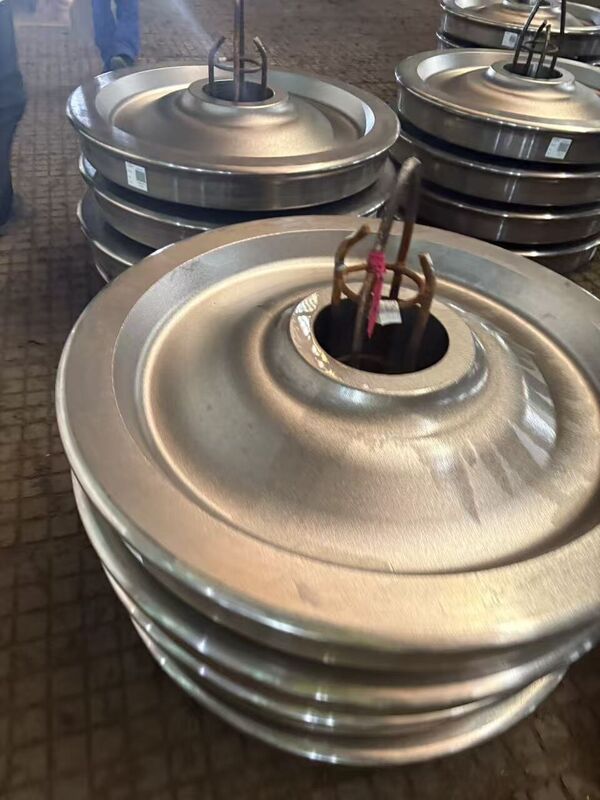
Created with Pixso. ER7 Steel Railway Wheels 500–800mm EN13262 for Industrial Rail Systems

ER7 Steel Railway Wheels 500–800mm EN13262 for Industrial Rail Systems

Brand Name: Kingrail
MOQ: Negotiable
Price: Negotiable
Delivery Time: 60 working days
Payment Terms: L/C,D/A,D/P,T/T,Western Union,MoneyGram
Detail Information
Place of Origin:
China
Certification:
ISO
Yield Strength:
650–800 MPa
Standard:
EN
Size:
Various Sizes Available
Durability:
Built For Long-lasting Performance
Application:
Railway Vehicles And Industrial Carts
Precision Rating:
P0 P6 P5 P4 P2
Usage:
Railway Vehicles, Cranes, Industrial Carts
Width:
Standard Widths Ranging From 100mm To 200mm
Diameter:
Various Sizes Available (e.g., 600mm, 700mm, 800mm)
Machining Tolerance:
+/-0.10mm
Sizes:
As Per Customer Drawing
Service Life:
Extended
Bearingtype:
Compatible With Tapered Roller Bearings
Error Code:
403 Forbidden
Delivery:
60 Days
Packaging Details:
standard export package, or as per customer request
Supply Ability:
1 million pcs/year
Highlight:

High strength steel rail wheels

,

Durable rail wheels for extreme loads

,

Steel rail wheels with consistent performance

Product Description

1. What It Is

Industrial railway wheels are designed for internal rail transport systems used in factories, steel plants, warehouses, and port facilities.
These wheels support stable movement, repeated loading cycles, and reliable material handling in industrial rail environments.
They are suitable for short-distance transport systems where durability and dimensional accuracy are important.

2. Where It Is Used

This type of railway wheel is widely used in:

  • Factory rail systems
  • Steel plant transport lines
  • Port and terminal rail systems
  • Warehouse and internal logistics rail
  • Industrial material transfer vehicles

3. Why Choose It

ER7 / ER8 Material

These materials provide a good balance of strength, fatigue resistance, and cost efficiency for industrial operating conditions.

Medium Diameter Range (500–800 mm)

This size range is suitable for compact rail vehicles and internal transport equipment in industrial facilities.

Controlled Hardness (260–320 HB)

This hardness range helps improve tread wear resistance while maintaining adequate toughness for repeated daily use.

Stable Flange Geometry

Proper flange design improves rail guidance and reduces derailment risk in plant and workshop rail systems.

Forged Manufacturing Process

Forging improves wheel density and consistency, helping support long-term operational reliability.

4. Data Support

Key performance parameters:

  • Wheel Diameter: 500–800 mm
  • Flange Height: 25–34 mm
  • Flange Thickness: 26–32 mm
  • Rim Thickness: 55–70 mm
  • Bore Diameter: 90–220 mm
  • Hardness: 260–320 HB

These parameters directly affect:

  • Vehicle compatibility → influenced by diameter and bore size
  • Operational stability → influenced by flange geometry
  • Wear resistance → influenced by hardness
  • Daily load performance → influenced by rim thickness and material
  • Maintenance cycle → influenced by manufacturing quality and heat treatment

5. Technical Specifications

Item Specification
Material ER7 / ER8
Diameter 500–800 mm
Hardness 260–320 HB
Standard EN13262 / ISO
Flange Height 25–34 mm
Flange Thickness 26–32 mm
Rim Thickness 55–70 mm
Bore Diameter 90–220 mm
Heat Treatment Quenching & Tempering
Inspection UT / MT / Hardness / Dimensional

6. Selection Guide

By Application

  • Factory rail system → ER7
  • Steel plant rail → ER8
  • Warehouse transport rail → ER7

By Load Capacity

  • Light industrial load → ER7
  • Medium load → ER7
  • Repeated heavy industrial duty → ER8

By Wheel Diameter

  • 500–600 mm → compact rail vehicles
  • 600–700 mm → standard industrial systems
  • 700–800 mm → heavier industrial transport equipment

7. What Problem It Solves

These railway wheels help solve:

  • Frequent wear in internal rail transport systems
  • Instability in compact industrial rail vehicles
  • Downtime caused by repeated wheel maintenance
  • Inconsistent fitment in plant rail applications

They improve system stability, reduce service interruptions, and support more efficient internal material movement.

8. FAQ

Q1: What material is suitable for industrial rail wheels?
ER7 is commonly used for standard industrial systems, while ER8 is suitable for heavier plant operations.

Q2: How to choose the correct industrial wheel diameter?
It depends on vehicle dimensions, axle design, and rail system layout.

Q3: Do you offer custom industrial railway wheels?
Yes, customized wheels are available according to drawings and application requirements.